


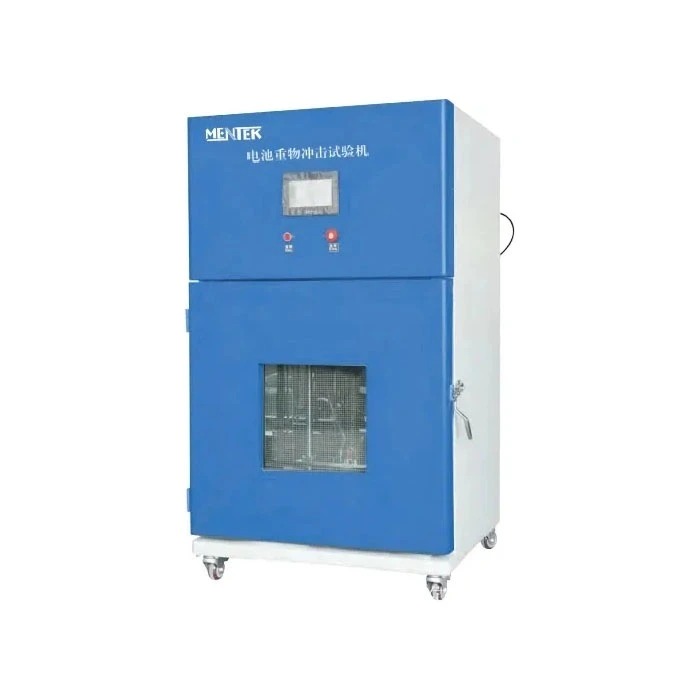
The Ultimate Guide to Battery Test Chambers: Selecting the Right Equipment for Safety & Longevity
However, selecting the right chamber is fraught with challenges. Temperature drift, evaporator frost, and inadequate safety measures can lead to catastrophic data loss or, worse, laboratory hazards. This guide provides a technical deep dive into what truly matters when sourcing a Battery Test Chamber for industrial applications.
1. Decoding Core Specifications: Beyond the Datasheet
When evaluating suppliers, most buyers focus on temperature ranges. While important, three often-overlooked specifications separate a production-grade chamber from a basic lab unit:
- Temperature Uniformity: A standard chamber might claim ±2°C accuracy, but if the uniformity across the shelf is poor, your battery pack's cells will age inconsistently. Look for chambers that guarantee tight uniformity to ensure every cell in your pack is tested under identical stress.
- Ramp Rates: How quickly can the chamber transition from -40°C to +85°C? For automotive standards like IEC 62133 and UN 38.3, fast thermal shock capabilities are critical for simulating real-world driving conditions.
- The Defrosting Dilemma: This is where most equipment fails. Traditional chambers require frequent shutdowns to manually defrost the evaporator during long-term low-temperature cycling tests (e.g., 500+ hours at 0°C). This causes temperature spikes and invalidates the test. Advanced systems now utilize Heat Pump Defrosting Technology. This innovation allows the chamber to perform automatic defrosting without interrupting the refrigeration cycle, maintaining stable temperatures below 0°C for over 500 hours without deviation. This is a non-negotiable feature for high-volume certification testing.
2. Safety First: Engineering for Abuse and Catastrophic Failure
Testing batteries involves pushing them to their breaking point. Abuse testing (overcharge, short circuit) carries a significant risk of thermal runaway and explosion. Your chamber must be engineered to contain the worst-case scenario.
A robust safety design should include:
- Mechanical Containment: Standard glass windows are a liability. Look for Explosion-Proof Grilles and reinforced viewing windows. The door should feature heavy-duty Explosion-Proof Chains to prevent it from being blown open during a blast.
- Pressure Management: A dedicated Explosion-Proof Pressure Relief Port is essential. It vents rapid pressure increases safely away from personnel, preventing the chamber body from deforming or rupturing.
- Electrical Insulation: During a test, a loose battery tab touching the metal interior can cause a short circuit. Premium chambers feature an interior treated with Teflon coating. This provides high-temperature resistance and, crucially, electrical insulation to prevent accidental shorts between the battery electrodes and the chamber walls.
3. Meeting Global Compliance Standards
Your equipment must align with international certification requirements. Ensure the chamber you select is certified to meet the rigorous demands of:
- IEC 62133-2:2017 (Safety requirements for portable sealed secondary cells)
- UN 38.3 (Transport testing for lithium metal and lithium-ion batteries)
- UL 1642 (Standard for Lithium Batteries)
- GB 31241 (Chinese National Standard for portable electronic devices)
Specifically, for Temperature Cycling (as required by UN 38.3), the chamber must handle transitions between extreme temperatures (e.g., 75°C to -40°C) within strict time limits (typically <30 mins) while maintaining precise control over 10+ cycles.
4. Application Scenarios: Matching the Chamber to Your Needs
| Scenario | Recommended Configuration | Key Feature Focus |
|---|---|---|
| University / R&D Lab | Benchtop or Compact Walk-in | Flexibility, Multi-zone control, Data logging |
| EV Battery Pack Manufacturing | Large Capacity Walk-in / Drive-in | High Volume, Explosion Proofing, Auto-defrost, Fast Ramp Rates |
| Consumer Electronics (TWS/E-Bike) | Standard Temperature Humidity Chamber | Precision, Compliance with IEC/UL, Cost-efficiency |
Conclusion: Invest in Data Integrity
Choosing a Battery Test Chamber is an investment in the integrity of your entire operation. By prioritizing advanced features like heat pump defrosting systems and multi-layered explosion protection, you mitigate risk and ensure your test data remains valid, repeatable, and compliant with global standards.
At Mentek, we specialize in high-reliability environmental test chambers designed specifically for the rigors of modern lithium battery testing. If you are looking for a partner who understands the engineering behind the safety, contact us today to discuss your specific testing requirements.
|
Get Expert Advice on Battery Test Chamber Selection Contact Our Engineers View Battery Test Chambers |