


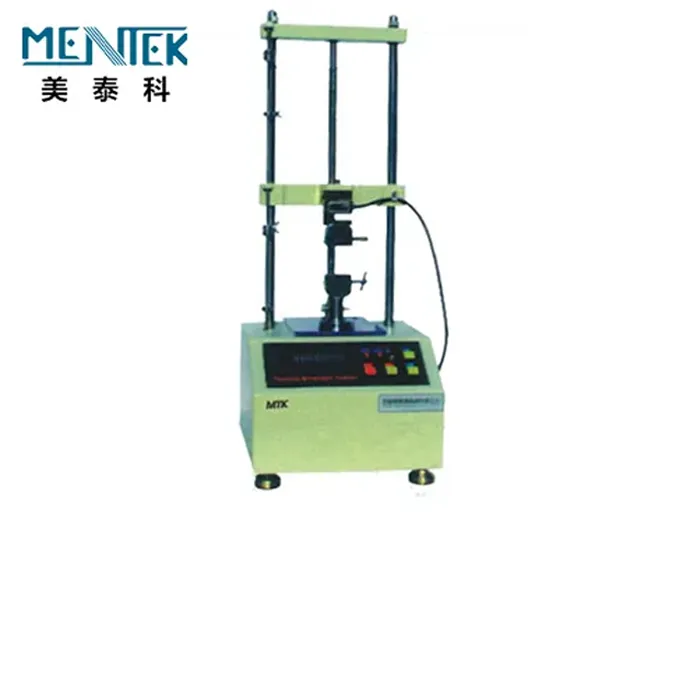
The Comprehensive Guide to Tensile Testing Machine Solutions: Optimizing Material Integrity and Reliability
Achieving uncompromising quality through advanced mechanical analysis and industrial precision.
Navigating the Complexities of Material Strength in Modern Manufacturing
In an era where product liability and safety standards are more stringent than ever, the risk of material failure is a challenge that keeps laboratory managers and quality engineers awake at night. Whether you are developing aerospace components, automotive parts, or advanced lithium batteries, a single structural weakness can lead to catastrophic failures, costly recalls, and irreparable brand damage. How can you be certain that your chosen materials will withstand the rigors of real-world stress?
The central question for every quality-focused enterprise is this: Are your testing protocols robust enough to predict performance under extreme tension? Without a high-precision Tensile Testing Machine, you are essentially operating in the dark, relying on theoretical data rather than empirical evidence.
What you will gain from this professional guide:
A deep understanding of Universal Testing Machine (UTM) mechanics.
Criteria for selecting between digital and computerized testing models.
Strategies to integrate mechanical testing with environmental stress screening.
Foundational Principles of Tensile Analysis
At its core, a Tensile Testing Machine, often referred to as a Universal Testing Machine (UTM), is designed to evaluate the physical properties of materials by applying controlled tension until failure. This process provides critical data points such as tensile strength, yield point, and elongation percentage.
Working on the principle of axial load application, the machine pulls a specimen from both ends, measuring the force required to stretch it and the extent to which it deforms. This data is visualized through a Stress-Strain curve, which serves as the "DNA" of the material's mechanical behavior.
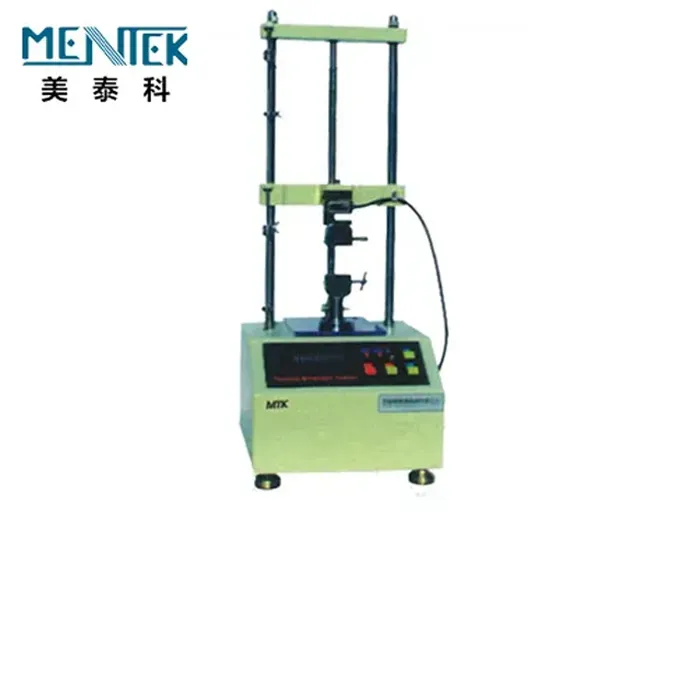
Strategic Material Testing: The Mentek Advantage
Mentek has been at the forefront of the testing equipment industry since 1999, providing specialized solutions that bridge the gap between mechanical durability and environmental resilience. Our range of Tensile Testing Machine models is engineered to meet the diverse needs of global laboratories.
1. MTK-L Series: Power-Operated Precision
The MTK-L series is designed for high-efficiency digital testing. It is ideal for industries requiring rapid, repeatable measurements of tension and pull strength. By utilizing advanced digital controllers, users can achieve high-accuracy data acquisition with minimal manual intervention.
2. Computerized Universal Material Testing (MTK-S)
For research and development applications, our Universal Material Testing Machine provides a computerized interface for complex analysis. This system allows for stretching, tearing, peeling, and compression tests across a vast array of materials, from fabrics and leather to metal alloys and polymers.
3. Integration with Battery Safety Testing
Mechanical integrity is vital for the new energy sector. Mentek integrates mechanical stress testing with our battery pack compression testing solutions, ensuring that lithium-ion cells maintain structural stability under physical impact and extrusion.
Why Global Industry Leaders Choose Mentek
20+ Years of Expertise
Since our inception, we have served hundreds of international clients, including Stanley Electric Japan and Hisense, refining our Tensile Testing Machine technology to meet the most demanding industrial requirements.
Compliance & Standards
All Mentek equipment adheres to international standards such as ISO 9001, ASTM B117, and IEC protocols, ensuring that your test results are globally recognized and legally defensible.
Customized Engineering
We specialize in customized chambers and testing systems tailored to your specific spatial and technical constraints.
Selecting the Right Tensile Testing Machine for Your Lab
| Feature | Digital Desktop Series | Universal Computerized Series |
|---|---|---|
| Primary Use Case | Production Line QC / Pull Tests | R&D / Complex Material Analysis |
| Control System | PLC / Digital Display | Advanced PC Software Control |
| Data Export | Real-time Display | Detailed Graphing & PDF Reports |
Frequently Asked Questions
Q: How often should a Tensile Testing Machine be calibrated?
A: To maintain ISO 9001 compliance and measurement accuracy, we recommend professional calibration every 12 months, or more frequently if used in heavy-duty 24/7 production environments.
Q: Can Mentek machines test non-standard materials like composites?
A: Yes, our universal material testing machines are compatible with custom fixtures for testing composites, ceramics, and high-performance polymers.
Q: What is the typical lead time for a customized UTM?
A: Standard models are available for quick shipping, while customized systems typically require 4-8 weeks for engineering, assembly, and rigorous pre-shipment validation.
Ready to Elevate Your Material Testing Standards?
Don't leave your product reliability to chance. Consult with a Mentek technical expert today.
Email us at: info@mentekint.com | Professional technical support available 24/7.
Conclusion: Selecting a high-quality Tensile Testing Machine is a strategic investment in your company's reputation and operational excellence. By partnering with a veteran manufacturer like Mentek, you gain access to precision engineering, comprehensive technical support, and the peace of mind that comes from knowing your materials meet the highest global standards of safety and durability. Whether through uniaxial tension, compression, or complex environmental simulation, our goal is to help you build better, safer, and more reliable products for the world.